AI Notetaking
The most reliable API for building notetaking applications and features

What is AI notetaking?
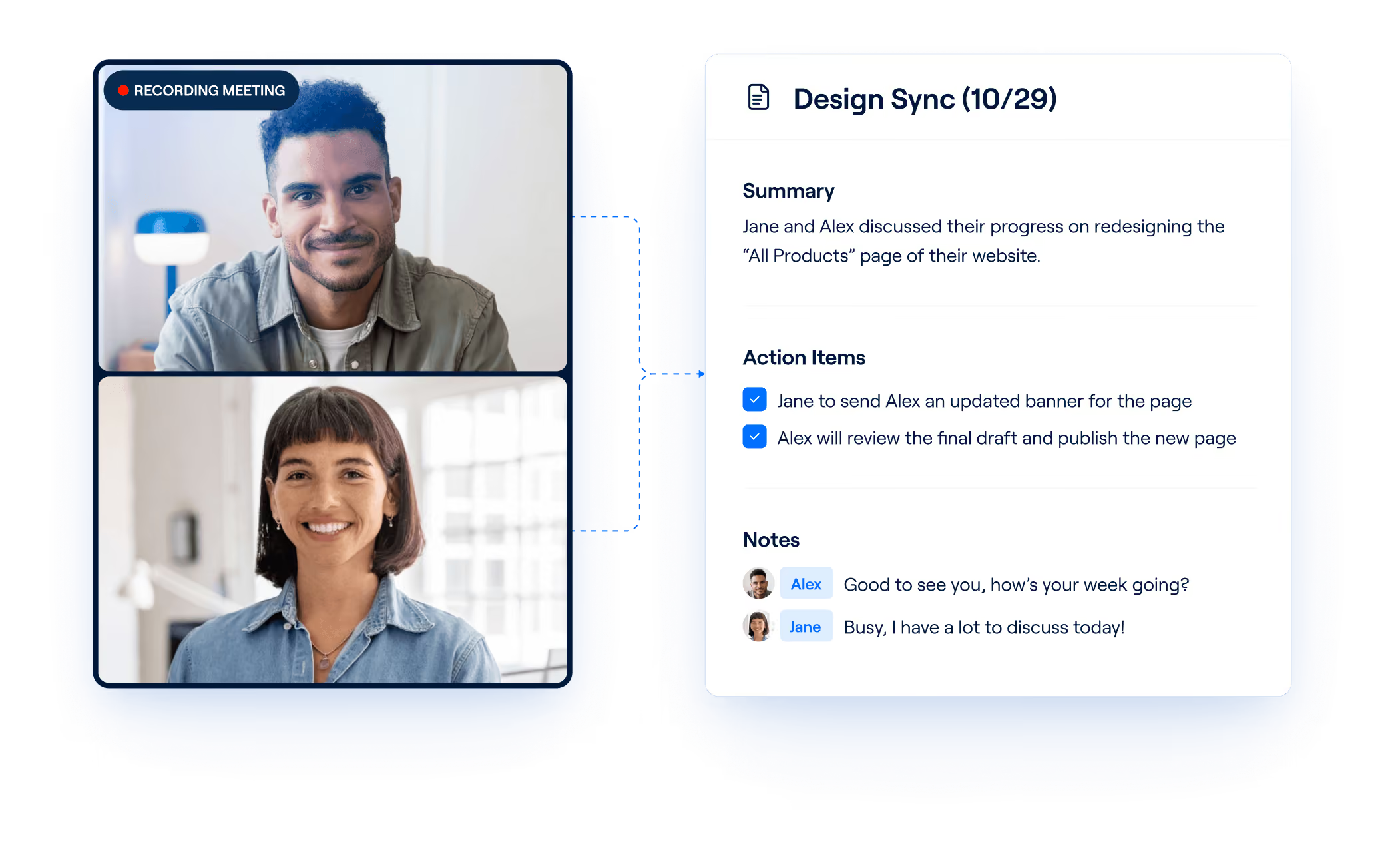
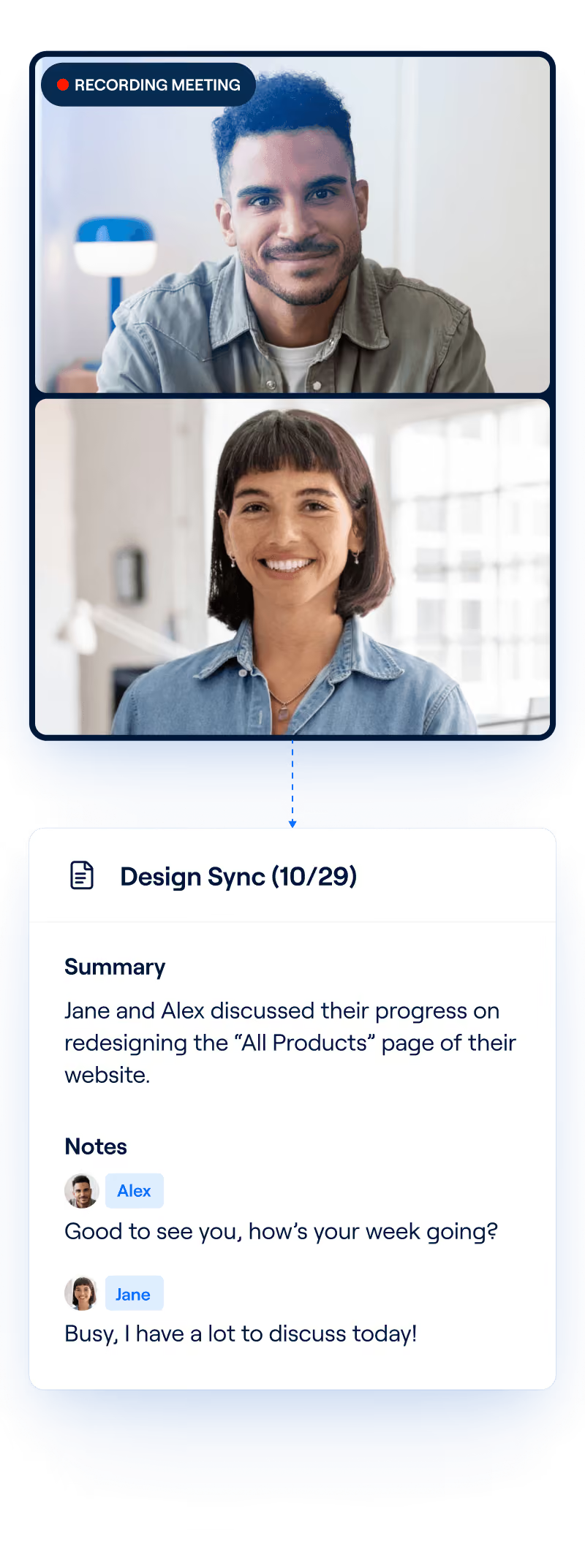
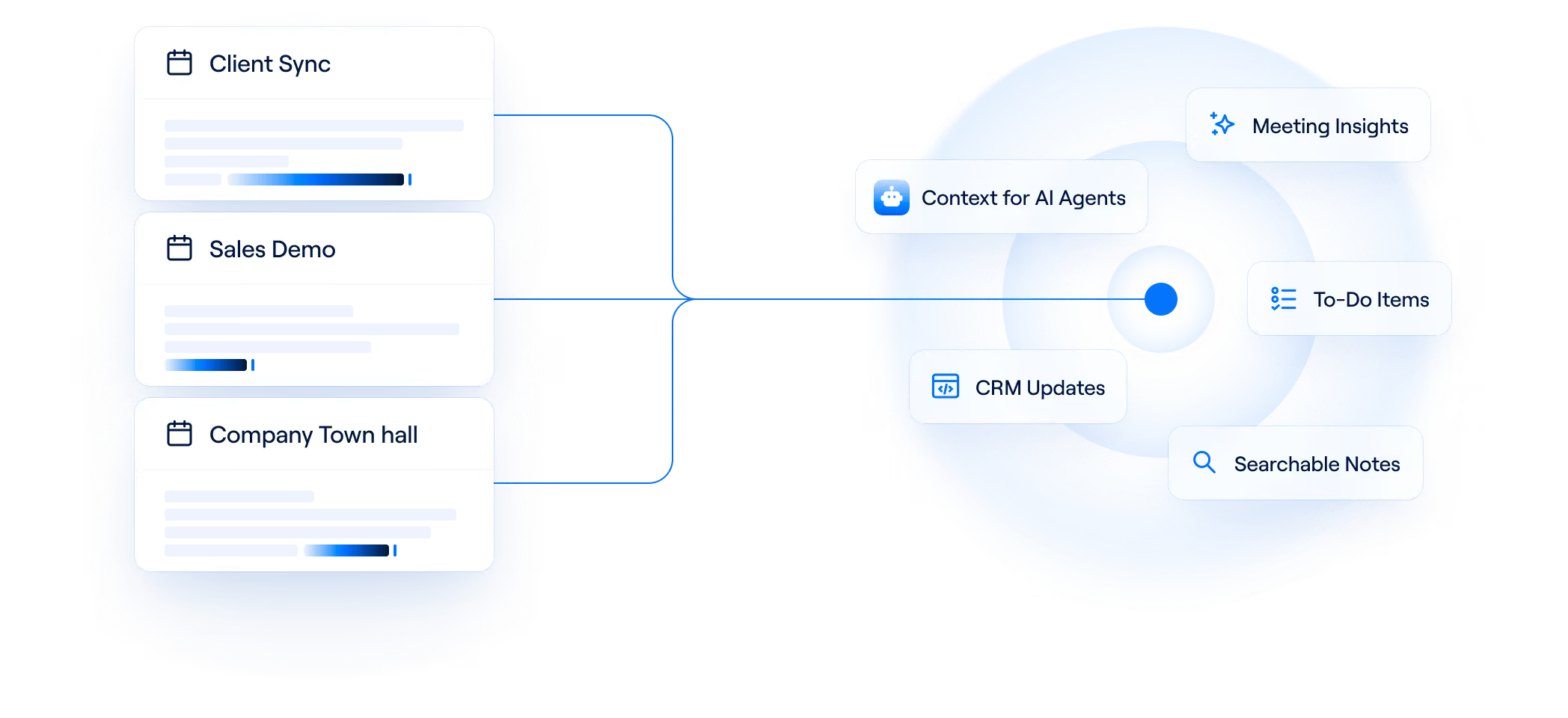
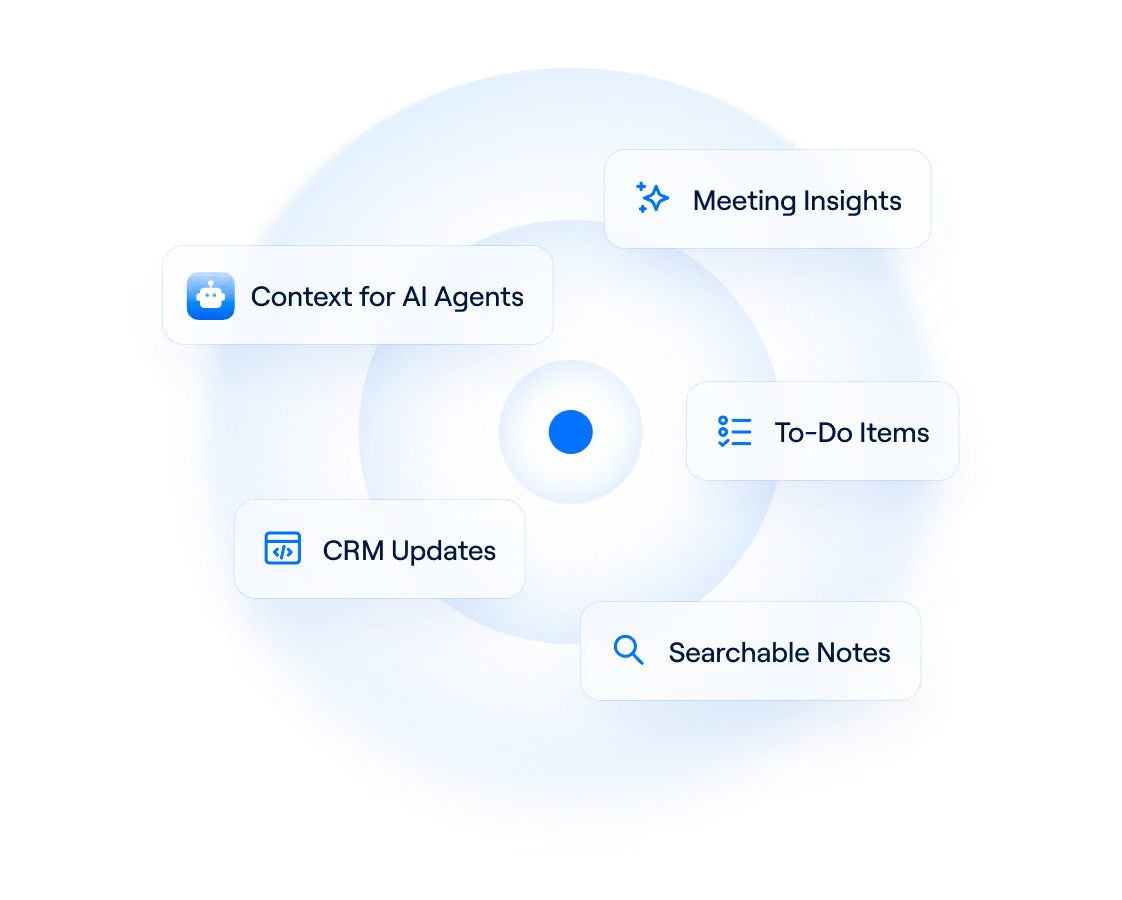
AI notetaking refers to automatically capturing a conversation and turning it into structured, usable notes. An AI notetaker can record a meeting, create a transcript, and pass that transcript to an LLM to generate artifacts like summaries, action items, and follow-ups.
An AI notetaker has two layers: infrastructure that reliably gets audio, video, and metadata out of the meeting, and a model that turns that data into notes. Recall.ai is the infrastructure layer, allowing notetakers to reliably join meetings and capture high-quality data and diarized transcripts.





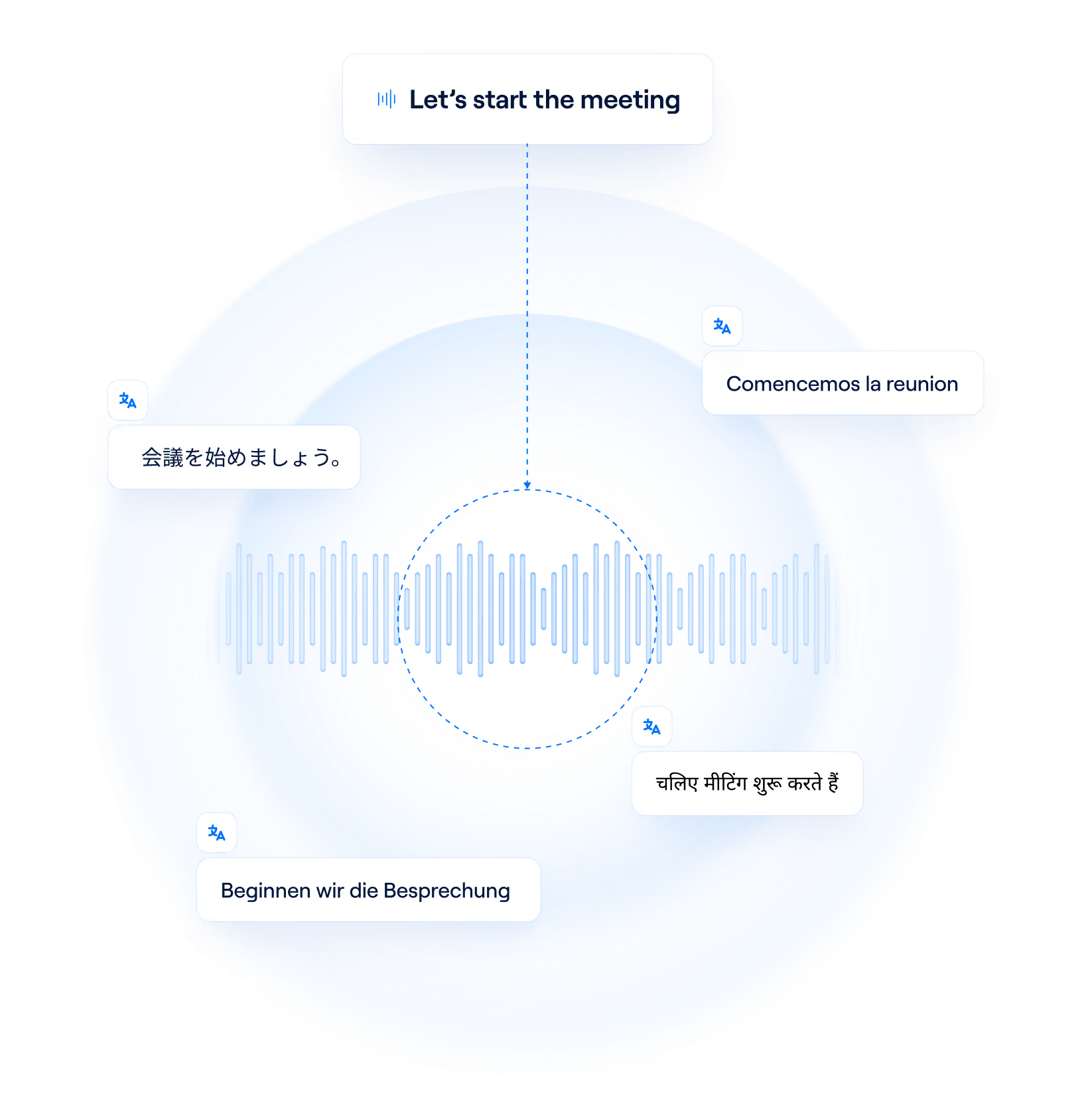
AI notetaking in 100+ languages
Recall.ai can deliver transcripts in close to 100 languages, offering both a native transcription service and integrations with multiple third-party transcription providers. Recall.ai also offers automatic language identification and code-switching support: if users switch between languages during a meeting, our API will transcribe their conversation correctly in both languages.
Record notes in real-time or asynchronously
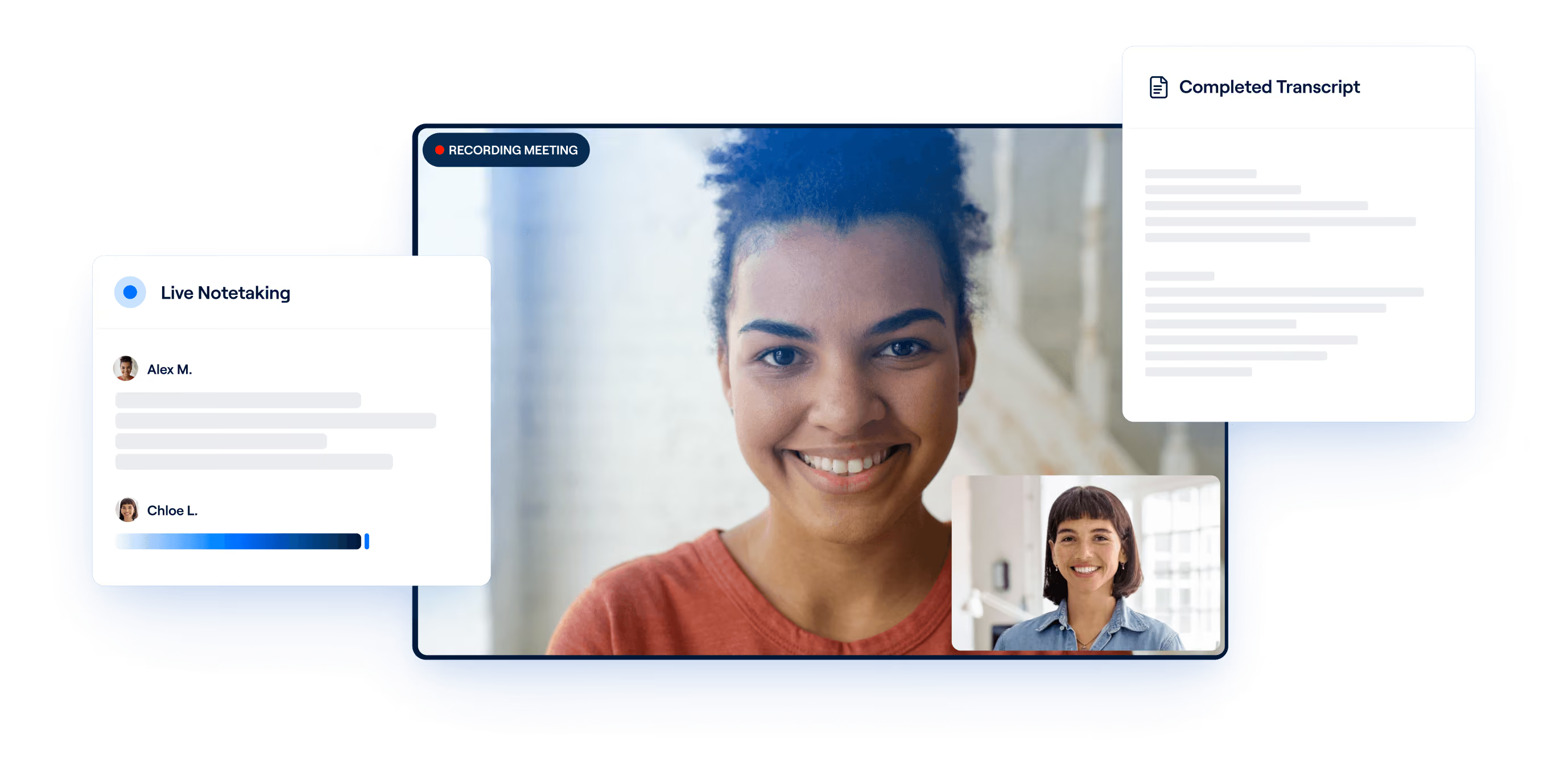
Recall.ai captures live and post-call transcripts from major meeting platforms like Zoom, Google Meet, Microsoft Teams, and more, as well as in-person chats. Stream transcripts, audio, video, and participant events to your application as the meeting happens, or receive complete recordings, transcripts, and other data after the meeting ends.
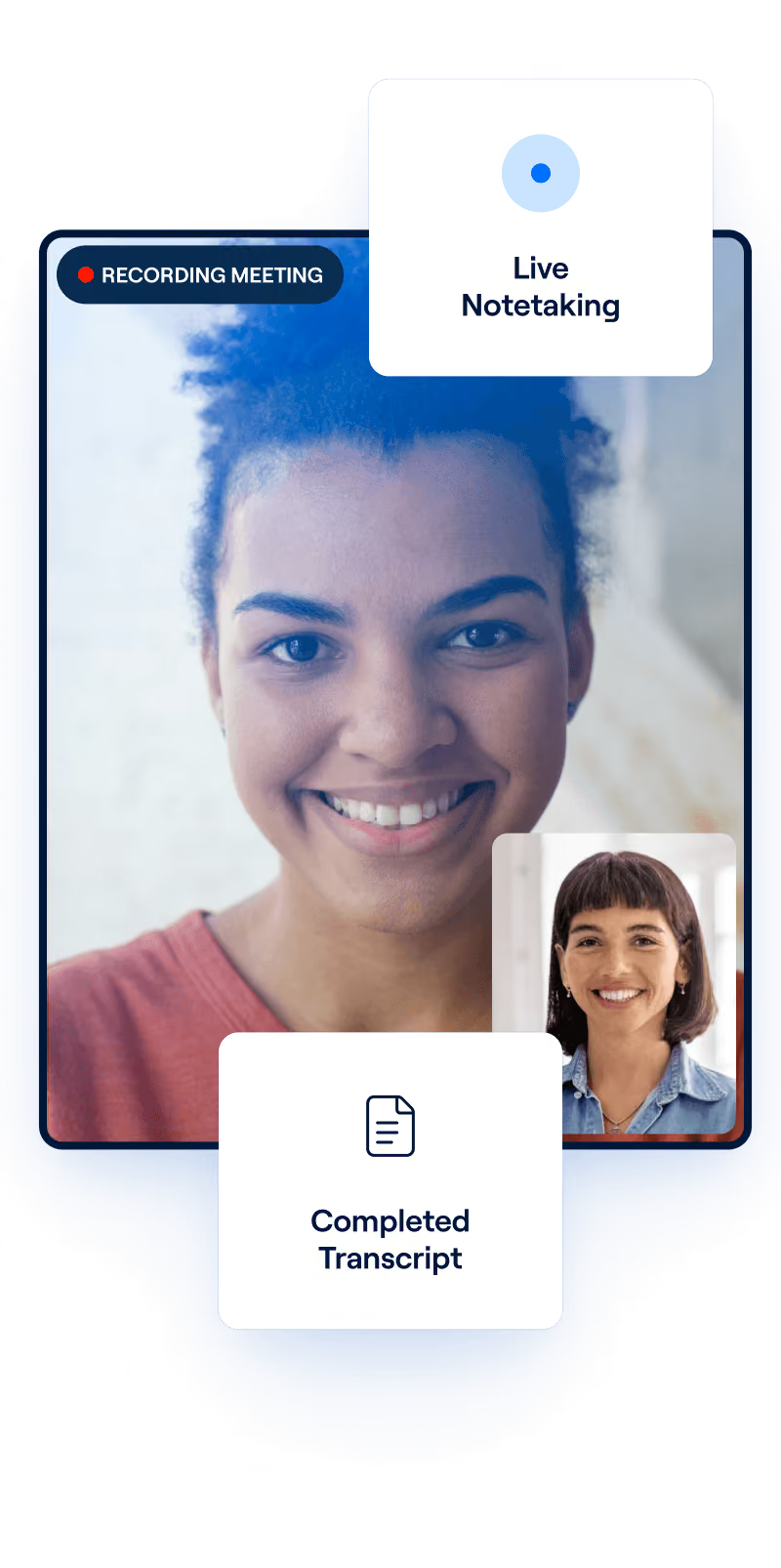
Why build AI notetaking into your product?
Companies across industries like productivity, sales, hiring, finance, and healthcare benefit from adding meeting notetaking into their products. By using Recall.ai to capture in-person and virtual conversations, companies can build everything from sales conversation intelligence tools to AI medical scribes and interview assistants.
AI notetaking for any conversation
You can build your notetaker to record meetings with a visible bot, or offer a botless experience where users capture conversations through a desktop app.


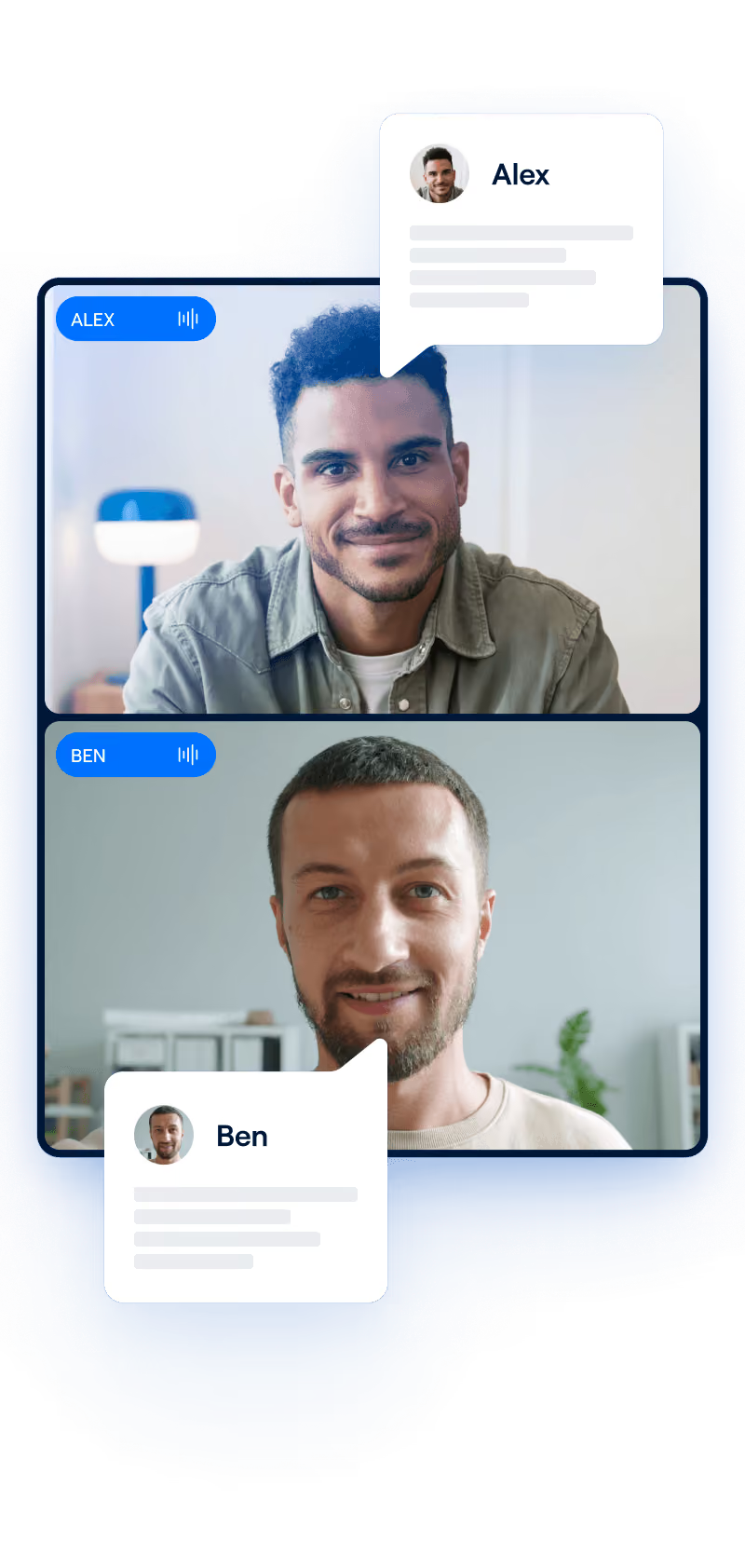
Correctly attribute speech to each participant
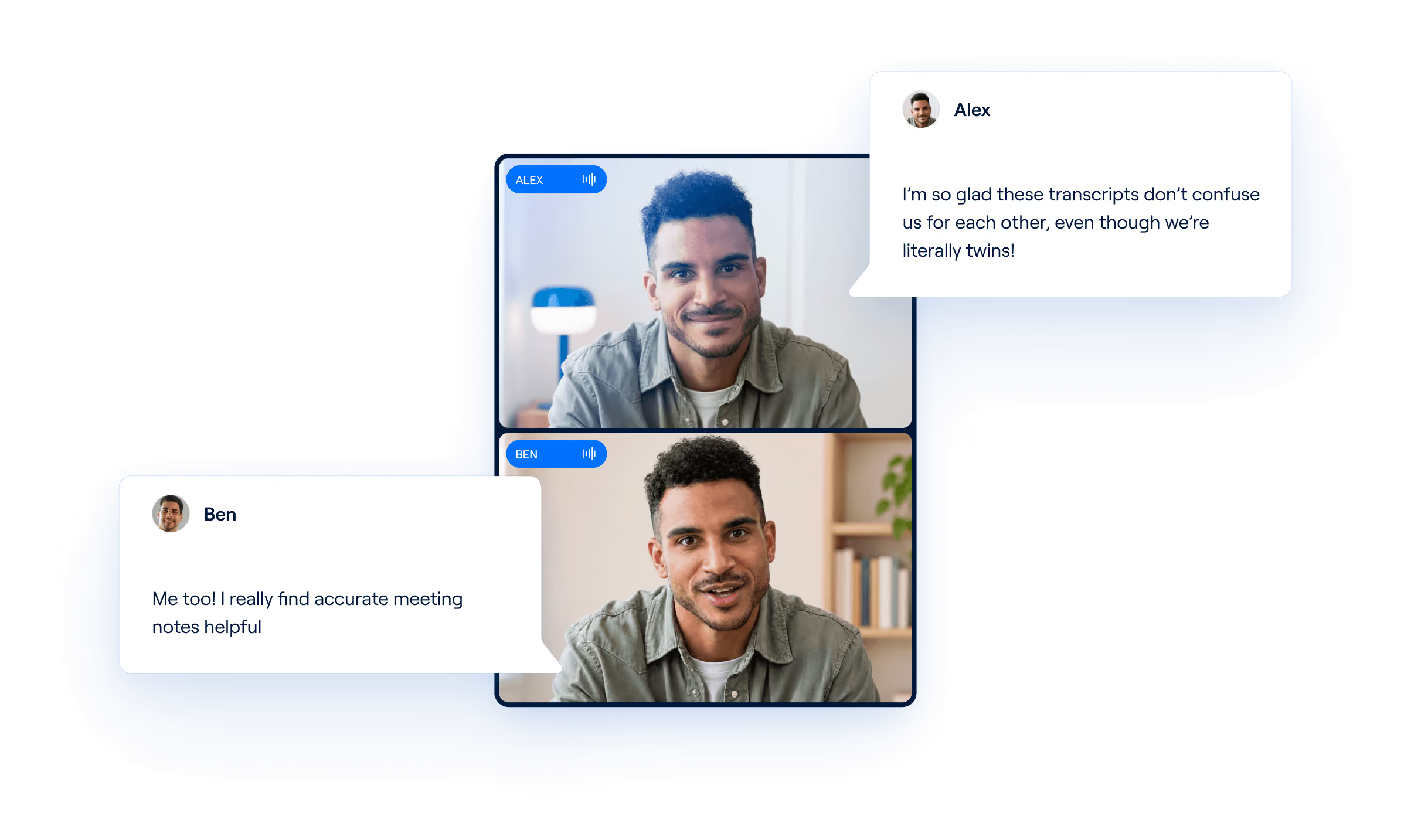
Both the Desktop Recording SDK and the Meeting Bot API offer perfect speaker diarization, meaning every part of the transcript will be attributed to the right person. Because Recall.ai captures separate audio streams per participant, it can accurately attribute notes even when people have similar voices or talk over each other during the conversation.
Keep your meeting data secure
Just call our notetaking API and we’ll handle scaling, reliability, and compliance, so your team can focus on creating the features your users love.
Reliable and stable
We power call recording features for thousands of companies, ranging from seed-stage startups to Fortune 500 enterprises.
Onboarding support
We work closely with your team, and have shared Slack channels to ensure so you are set up for success.
Scalable infrastructure
We run thousands of concurrent bots and process billions of minutes in recording per year. All while maintatining a 99.9% uptime SLA.
Security Controls
We are SOC2, ISO 27001, GDPR, CCPA, and HIPAA Compliant.
For more information, check out our security portal.
GDPR
SOC 2
HIPAA
CCPA
ISO 27001
Frequently asked questions
An AI notetaker API gives your application the infrastructure to join meetings, record them, and return transcripts and metadata. You then pass that data to an LLM to generate notes, summaries, action items, and follow-ups.
Yes. Recall.ai offers native transcription out of the box and integrates with speech-to-text providers like AssemblyAI, ElevenLabs, and Deepgram. You can use Recall.ai to benchmark transcription providers and pick the option that best fits your customers’ language needs.
Yes. Recall.ai’s calendar API allows you to access data from the calendar event, including participant emails. You can then build functionality like emailing notes or to-do items to meeting attendees.
Sending a meeting bot to a call or configuring a botless recorder takes just a few minutes. From there, developers take an average of 72 hours to bring a notetaking product to market with Recall.ai.
Recall.ai provides the recording, diarized transcript, and metadata. You pass that data to the LLM of your choice to generate summaries, action items, or any other output relevant to your product. To see how it all fits together, you can fork our sample app for a notetaker built on the Desktop Recording SDK.
Yes. Recall.ai captures separate audio streams per participant and delivers perfectly diarized transcripts with participant names and emails attached, even when multiple people speak at once.
Yes. Recall.ai’s free calendar API connects to Google Calendar and Microsoft Outlook and can sends bots to upcoming meetings based on designated rules you define, such as all external calls or all meetings with a given word in the title. This allows you to schedule notetaking for meetings of your choice.
You can configure your real-time transcription settings to optimize for low latency. This is accomplished through partial data transcription, which means transcript data will be delivered immediately, even before an utterance is completed.
Recall.ai successfully records meetings over 99.9% of the time and processes millions of hours of recording per day. For on-device recording with the Desktop Recording SDK, built-in protections guard against device and network failures.


